Our Pearls from Peer Review series is back
Aug. 23, 2026Regular insights for problem solving, preventing harm
By: Jenny Williams, MD, Salem Hospital Multidisciplinary Peer Review Committee (MRPC) Chair and West Valley Hospital Interim MPRC Chair
Enjoy, and let us know what you think! Email commonground@salemhealth.org.
Introduction/pathogenesis
- Chickenpox, which is characterized by vesicular lesions in different stages of development.
- Herpes Zoster, also known as shingles, causing painful, unilateral vesicular eruptions in a single or multiple dermatomes.
- Active treatment with high dose corticosteroids (20 or more mg of prednisone per day for two or more weeks)
- TNF alpha inhibitor therapy
- Advanced or untreated HIV
- Recipient of a solid organ transplant
- Common variable immunodeficiency
- Active treatment for solid tumor and hematologic malignancies
Sometimes these lesions can become secondarily infected with bacteria. This may present as purulent drainage, fever and/or erythema. If there are any concerns about secondary infections, it is advised to obtain an ID consultation.
Diagnosis/treatment
In such patients who are diagnosed with disseminated zoster, the treatment is Acyclovir 10 mg/kg IV every 8 hours. Diagnosis is made by swabbing an unroofed lesion and sending it for VZV PCR. However, treatment should not be delayed pending results as this can take some time. Once lesions are improving or crusting over, patients can be transitioned to valacyclovir 1 gram by mouth, three times a day. Valacyclovir has excellent bioavailability, but treatment should always start with IV acyclovir. The duration of treatment is typically 10 to 14 days.
Infection prevention
Appropriate infection prevention measures for patients with disseminated zoster include airborne and contact isolation until all lesions are crusted and dry.
Questions?
Feel free to contact our Infectious Disease team for a consult or our Infection Prevention team for any isolation related questions. Email infection.prevention@salemhealth.org or call 503-814-2788.
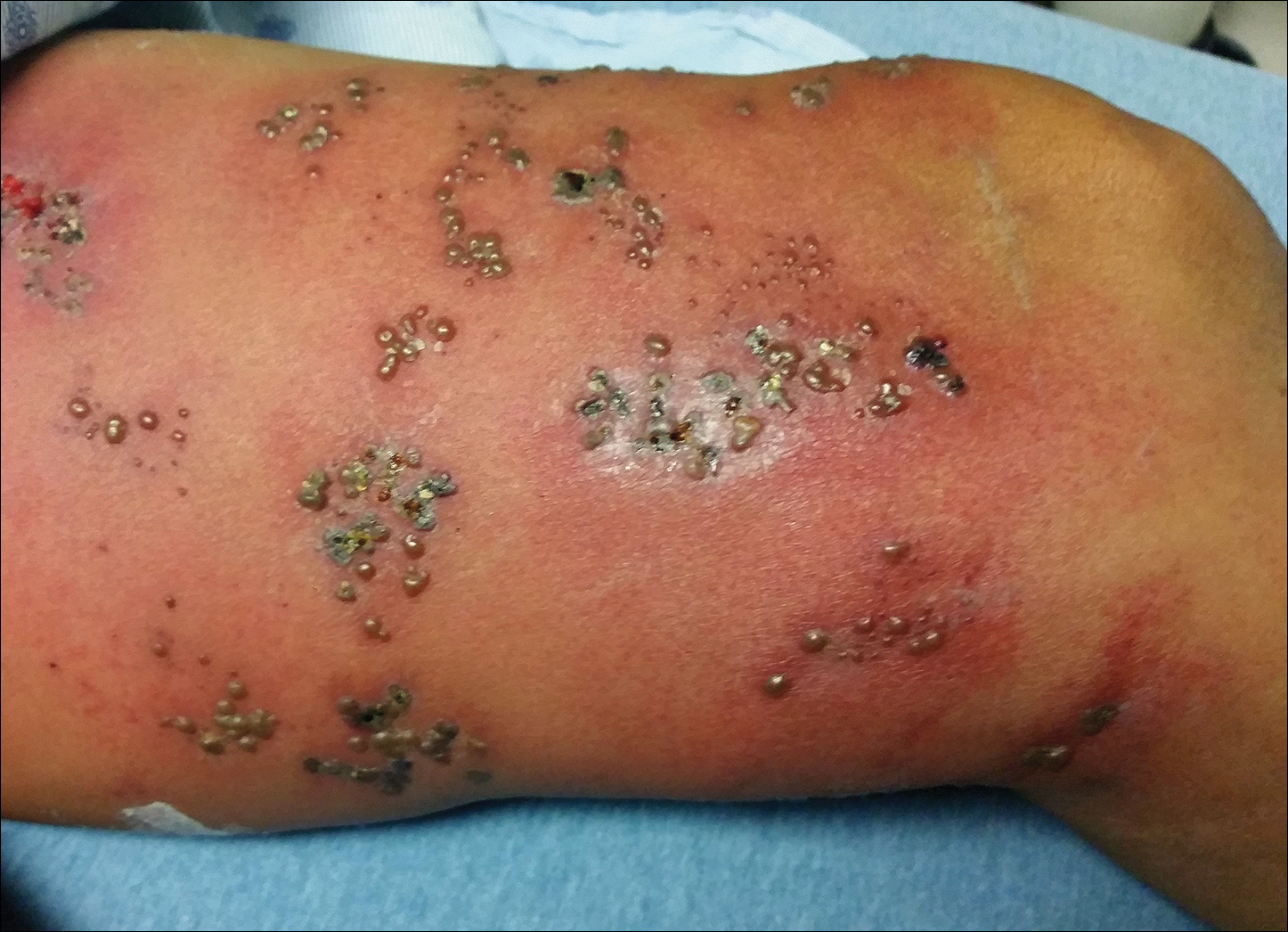
Figure 1: Disseminated Herpes Zoster with secondary bacterial infection. Note the presence of pustules.